A French forwarding address: what it is, and what it isn't
A forwarding address is a French postal address, in your name, at a provider who receives your parcels and sends them on wherever you live. Simple to describe, and routinely confused with a service the French post office sells that does something else entirely.
The word "forwarding" covers two very different things, and the confusion wastes a lot of people's time. Let us clear it first, because it is probably what brought you here.
It is not the post office's mail redirection
La Poste, the French postal service, sells mail redirection: you move house, and letters arriving at your old address are sent on to the new one for six or twelve months. It is a subscription, built for letters and domestic post, and it assumes you already had a French address.
A forwarding address in the sense of this article is something else: an address opened for you at a warehouse, to receive purchases, from which parcels leave for other countries. No subscription, no house move, no letters. You never needed to have lived in France to have one.
If you are trying to follow your mail after moving, La Poste is who you want. If you are trying to buy from France and receive it abroad, read on.
How it actually works
You create an account and the address is issued immediately. It carries a personal identifier that separates you from every other customer at the same warehouse — that identifier is how your parcel is matched to you on arrival, and leaving it out is the one mistake that really costs you. How to enter it on a shop's checkout is covered here.
You then order wherever you like, giving that address for delivery. To the shop you are a French customer: it offers its domestic delivery options, often free, and its form stops refusing you. The parcel reaches us, we receive it, open it, check it and weigh it.
It then waits free of charge for 45 days while you gather others. When you decide to send, we pack a single box, weigh it for real, and you choose your delivery from several carriers, times and prices. You pay for shipping only at that point.
Two ways to get a parcel to you
You order yourself. On French sites that accept your card, you enter your FrenchShopper address at checkout. To the shop you're a French customer; the parcel lands at our warehouse, we receive it, and we forward it to you. The address is free and comes with your account.
We buy for you. On Vinted, Leboncoin, and any seller who only ships within France or rejects a foreign card, you send us the link: we check it, quote it, and once you've paid, we buy with our own French account and card. The details are here.
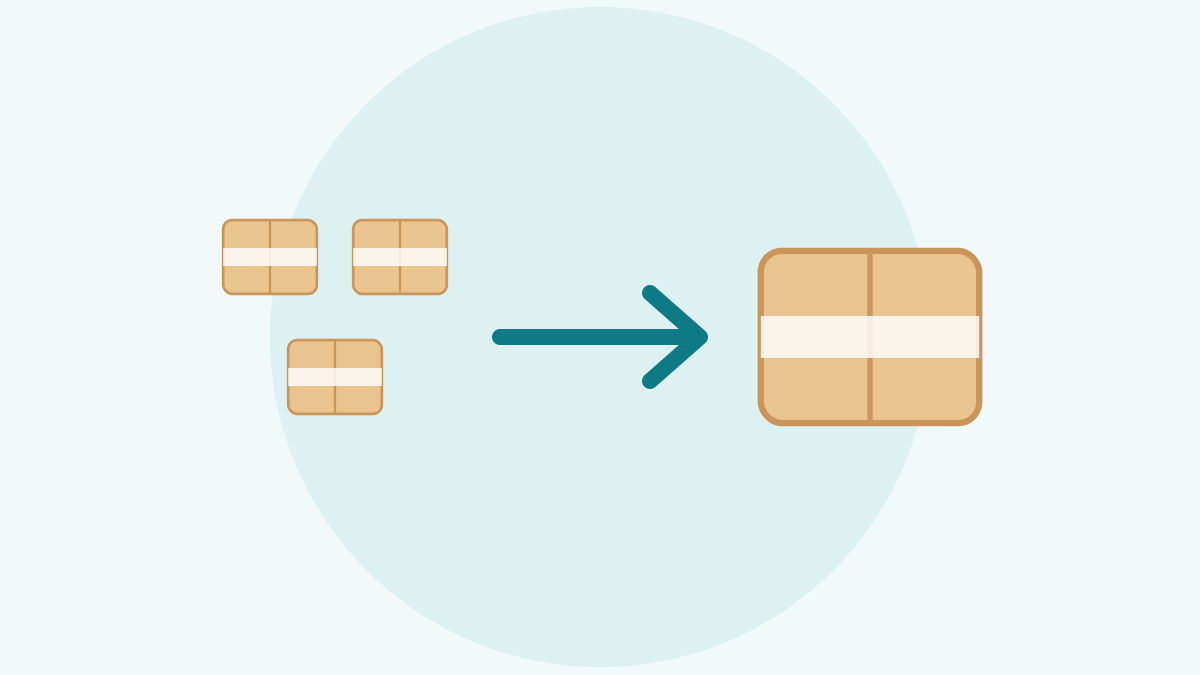
Either way, your items wait for free for 45 days in our warehouse so you can gather several — and everything leaves in one box, with one shipping charge.
The six questions to ask before choosing one
Forwarding addresses are not all alike, and the differences never show on a homepage. Here is what to check, most important first.
Is storage free, and for how long? This is what makes consolidation possible. A provider who bills storage by the week pushes you to ship early, so to ship half-empty boxes, so to pay more overall.
Is the shipping price shown before you pay, carrier by carrier? You should see several offers with their delivery times and choose. A single price imposed afterwards means you are not being shown everything.
Is there a subscription? Many services charge for the address itself, monthly or yearly. If you order three times a year, the subscription costs more than the parcels.
What happens when the parcel is opened? A service that opens, checks and weighs on arrival saves you from shipping a broken or wrong item halfway across the world. One that forwards the box unopened lets you find out on delivery.
Is the declared customs value the real one? A provider offering to under-declare is putting you at risk, not itself: it is your parcel that gets held, taxed on an estimate or seized, and insurance only ever covers the declared value.
Who answers when something goes wrong? A lost parcel, a broken item, a customs office asking for a document: that is where the difference between a service and a letterbox shows.
What it costs, and what moves the price
With us the address is free, there is no subscription, and storage is free for 45 days. You pay only the real transport, once, when you ship — with insurance and packaging already in the quoted price.
Two things move that price and only one is yours to control. The destination country, which you do not choose. And the number of shipments, which is entirely yours: the price of a parcel rises far more slowly than its weight, so six items in one box cost far less than six one-item parcels. Estimate your shipment from its weight and your country, before ordering anything at all.
Frequently asked questions
Is a forwarding address the same as the post office redirection service?
No, and this is the most common confusion. La Poste forwards your mail from an old address to a new one after you move, on a subscription. A forwarding address is a warehouse address opened for you to receive purchases and send them abroad: no subscription, no house move, and you never needed to have lived in France.
Do I have to pay to get a French address?
With us, no: the address is free, instant, and there is no subscription. You pay only to ship your parcels, once, when you decide to send them. Be wary of services that charge for the address itself — if you order rarely, the subscription costs more than the shipments.
Can I receive letters at that address?
No. It is a parcel address, not a postal address and not a company registration. It exists to receive purchases and send them on. For letters, the post office redirection is what you want.
How long can my parcels stay at the warehouse?
Forty-five days free of charge, counted from the arrival of each parcel. That is what makes consolidation possible, and consolidation is what really brings the price per kilo down.
What if a parcel arrives damaged?
We open and check it on arrival, before anything ships. If something is wrong we tell you with photographs and you decide: return it to the seller, or send it anyway. That is the whole point of a service that opens parcels rather than forwarding them blind.