Buying from French online stores from the USA: the four blockers
You found what you wanted on a French site and something stopped you. There is never just one blocker, there are four, they have nothing to do with each other, and that is exactly why the tips you read online work about one time in three. Here is how to tell which wall you hit, and what gets past all of them.
Buying from France while living in the United States ought to be simple. In practice about half of these orders die somewhere between the basket and the confirmation page, and most people give up without ever learning what went wrong. The trouble is that there is no single blocker: there are four, they are unrelated, and a trick that fixes the first does nothing about the third.
The four walls, most common first
The declined card. Everything works until payment, then the bank or the site rejects it. This is a fraud check: a card issued in one country, a billing address in another, and the payment is refused automatically. Nothing ever tells you that is the reason, which is what makes this one so maddening.
The address form. The site only lists France in its country menu, or demands a five-digit postcode, or rejects your state. You never even reach the payment page.
Delivery that stops at the border. The site accepts everything, then announces it does not serve your country. This is the norm among smaller labels and designers: switching international on means handling distant returns, customs and complaints, and many would rather not.
The regional catalogue. The subtlest one, and the one almost nobody names. Plenty of French brands do ship to the United States — but through a separate storefront, in dollars, whose catalogue is shorter than the French one. You are redirected silently, and the item you came for is simply not there — we have seen a French label show three times as many models on its French storefront as on its dollar one, with the piece our customer wanted on neither.
Telling your wall apart in thirty seconds
Put an item in the basket and go as far as the delivery screen without paying. If your country is missing from the list, it is the address wall or the delivery wall, and no card on earth will help. If your country is there and you reach payment, try the card: an instant refusal, with no code from your bank, means the fraud check. And if you were bounced to a dollar version of the site, compare its catalogue with the French one — that is a different problem, and the only one where the brand will tell you it serves you perfectly well.
This matters because it tells you what can possibly work. A French prepaid card sometimes clears the first wall and does nothing about the other three. A VPN clears none of them: it changes where the site thinks you are, never what it will ship nor what your bank will authorise.
What a French address changes
The first three walls share one cause: the site sees you as a foreign customer. With a French delivery address in your name it sees a French one. Your country appears, delivery is offered and often free because it is domestic, and the fraud check has no mismatch left to flag once your billing follows.
The fourth wall falls too, and it is the one people underestimate. Ordering from the French storefront gets you the French catalogue and the French price, which on a brand that bakes import duties into its dollar prices can be a real difference. You then pay the shipping to your door — once, for the whole box, whatever it holds.
Two ways to get a parcel to you
You order yourself. On French sites that accept your card, you enter your FrenchShopper address at checkout. To the shop you're a French customer; the parcel lands at our warehouse, we receive it, and we forward it to you. The address is free and comes with your account.
We buy for you. On Vinted, Leboncoin, and any seller who only ships within France or rejects a US card, you send us the link: we check it, quote it, and once you've paid, we buy with our own French account and card. The details are here.
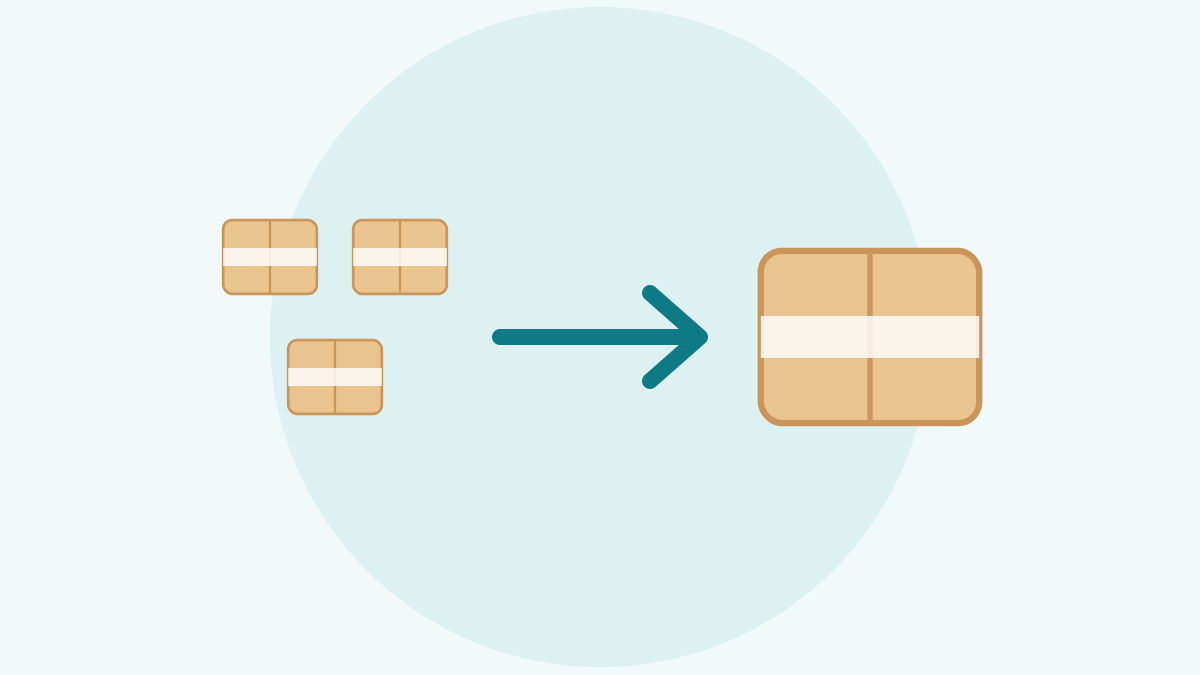
Either way, your items wait for free for 45 days in our warehouse so you can gather several — and everything leaves in one box, with one shipping charge.
What travels well from France, and what does not
Anything light, dense and valuable per kilo travels very well: clothes, shoes, beauty, fragrance without alcohol, books, small parts, collectables. That is where the ratio between what you receive and what you pay is best.
Be wary of bulk. A half-empty box is billed as if it were full, because carriers charge on whichever is higher, actual or volumetric weight. A large light object is therefore the worst case there is. And some categories never leave at all — aerosols, alcohol, loose lithium batteries; the full list is here.
The rule that decides whether it is worth it
One sentence: the price of a shipment rises far more slowly than its weight. Bringing one item over is the worst possible maths; bringing six in one box is the best. That is why your purchases wait free of charge for 45 days with us, so you can gather several, from different shops if you like, before a single box leaves. The details of consolidation are here.
One more thing specific to the United States, and it is not small: every parcel is now subject to customs duties whatever its value, since the exemption that used to cover small parcels no longer applies. One clearance for a full box beats six clearances for six parcels. Estimate your shipment before you order anything.
Frequently asked questions
Why is my US card declined on a French website?
Almost always because your card is issued in one country and your address is in another: fraud checks reject the mismatch without ever saying so. It is not a limit or a balance problem, and calling your bank will not change it. A French delivery and billing address removes the mismatch.
Will a VPN let me order from a French site?
No, and it is the most common false hope. A VPN changes where you appear to browse from, nothing else. It does not make your card acceptable, it does not add your country to the delivery list, and it gives nobody a way to ship a parcel to you.
French brands do ship to the USA — why would I need you?
Many do, and we will not pretend otherwise. But they often ship from a separate dollar storefront whose catalogue is shorter than the French one, with import duties built into the price. If the item you want is only on the French site, ordering from the French site is the only way to get it.
Do I pay customs on top?
Yes, and nobody can include it in advance: US customs assesses it on arrival, on the declared value, and the carrier collects it from you with a handling fee. Our price covers transport, packaging and insurance, never destination taxes. Consolidating several purchases into one box means one clearance instead of several.