Choosing your carrier: Colissimo, Chronopost, DHL, FedEx or UPS?
When you ship, you see several offers, with different names, prices and delivery times. They don't differ only by price. Here's what each carrier does well, what it does less well, and how to choose depending on what's in the box.
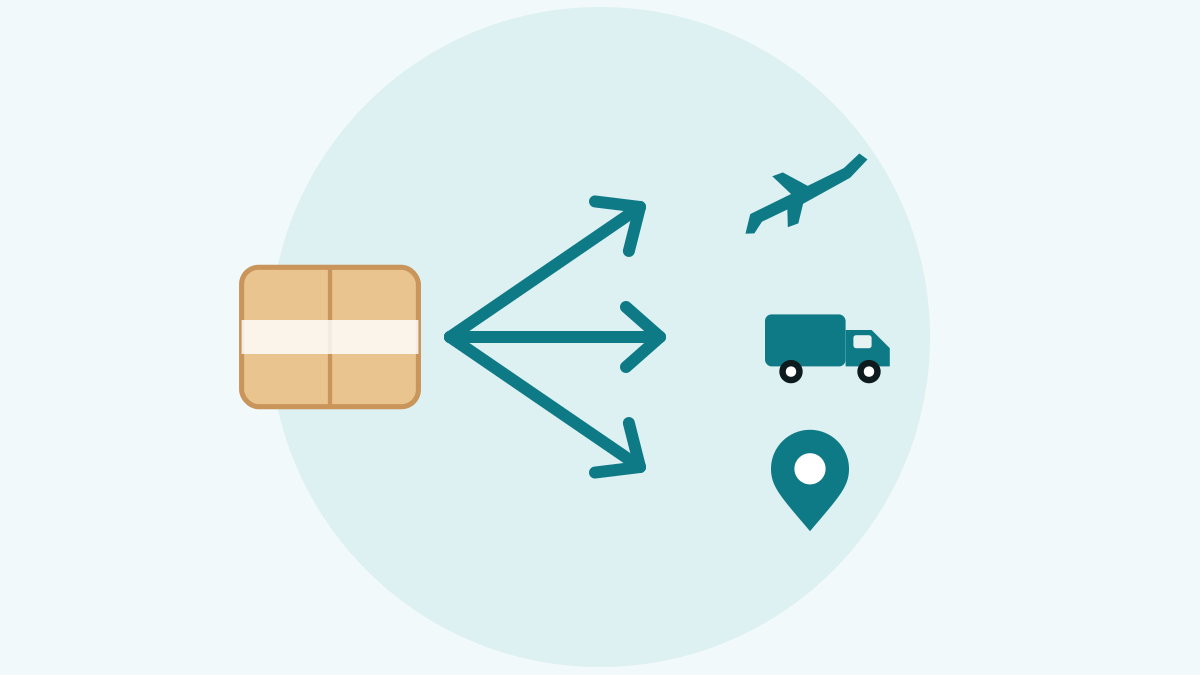
We don't have a house carrier. For every parcel, our tool queries several carriers' grids for your destination, your weight and your box, and shows you every offer with its price and delivery time. You choose. But you need to know what's behind each name.
Two families, two logics
The postal network. Colissimo International, and Colissimo Outre-Mer for the French overseas departments and territories. The parcel leaves with La Poste and arrives with your country's post. It's usually the cheapest offer, with a longer delivery time, decent tracking that's sometimes less detailed on arrival, and customs clearance handled by the local post — whose handling fees are often more moderate than express carriers'.
Express. Chronopost, DHL Express, FedEx, UPS. One operator end to end, precise tracking at every step, short delivery times, and customs clearance handled by the carrier itself — which advances your duties and taxes and claims them back, with its fee. Dearer, faster, more predictable.
At FedEx, two levels come up often: International Economy, the good compromise on long distances, and International Priority, faster. Chronopost offers Chrono Express internationally and, in Europe, pickup-point deliveries.
What really matters, depending on the parcel
Delivery time. On our measurements, the gap between the cheapest and the fastest offer is usually two to four days to North America or Asia, more to Oceania. If nothing's urgent, the postal network or the economy option is enough; if you're leaving on a trip next week, express earns its keep.
Value. All our offers are insured — we leave out those that can't be. But for a high-value box, detailed tracking and delivery against signature are worth the extra: you know every hour where it is, and who received it.
Customs clearance. This is the least visible point and the most decisive. Every carrier clears your parcel, but their handling fees differ, and the postal network is often gentler on that line. On a low-value shipment to a country that taxes from the first euro, those fees can weigh more than the price gap between two offers. Look up each carrier's clearance fees in your country — we show the transport, not what customs and the carrier will ask on arrival.
Delivery mode. To your door, with or without signature; in Europe, to a pickup point, often cheaper and handy when you're not home. The mode is on each offer.
Destination. To overseas France, Colissimo Outre-Mer is almost always the reference offer, with express as the fast alternative. To some countries, one carrier is far better established than another: that's what the displayed delivery times reflect.
How we read the offers, in the warehouse
- We look at the delivery time first, not the price: two offers two days apart and a few euros apart, express wins.
- We look at what's in the box. Secondhand clothes: postal does the job very well. Electronics, luxury, a fragile item: express, signature.
- We think about arrival. An express parcel arrives fast, but asks for its duties and fees straight away, by payment link. A postal parcel arrives later, and the local post handles the rest its own way.
What we'd advise
For a box of clothes or ordinary objects, with no rush: the cheapest offer, almost always postal. For a valuable box, or when the date matters: express, with signature. And when in doubt, ask us at the quote stage — we see these parcels go by every day.
Frequently asked questions
Why don't I always see the same carriers depending on the country?
Because each carrier doesn't serve every destination, nor every parcel format. Our tool shows the offers actually available for your country, your weight and your box, on the day you ask.
Is the cheapest carrier less reliable?
No. Colissimo International is the postal network, reliable and insured like the others; it's simply slower and its tracking is sometimes less detailed on arrival. The difference is in delivery time and service, not in the safety of the parcel.
Are all your offers insured?
Yes. We leave out offers that can't be insured, and insurance is included in the displayed price, on the declared value of your items.
Can I choose pickup-point delivery?
In Europe, yes, when the offer exists for your destination: it then appears in the list, often cheaper than home delivery. Outside Europe, delivery is to your door.